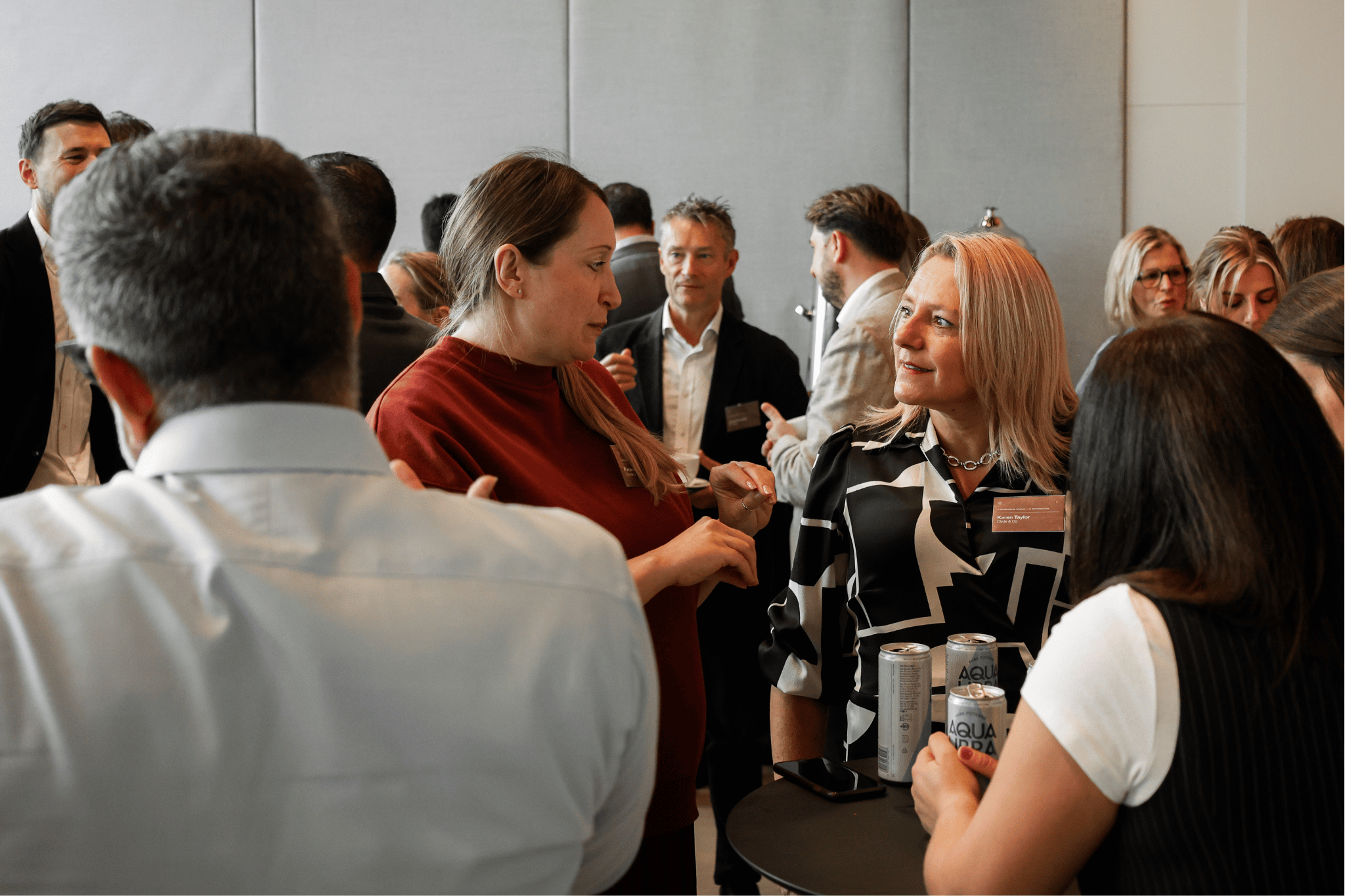
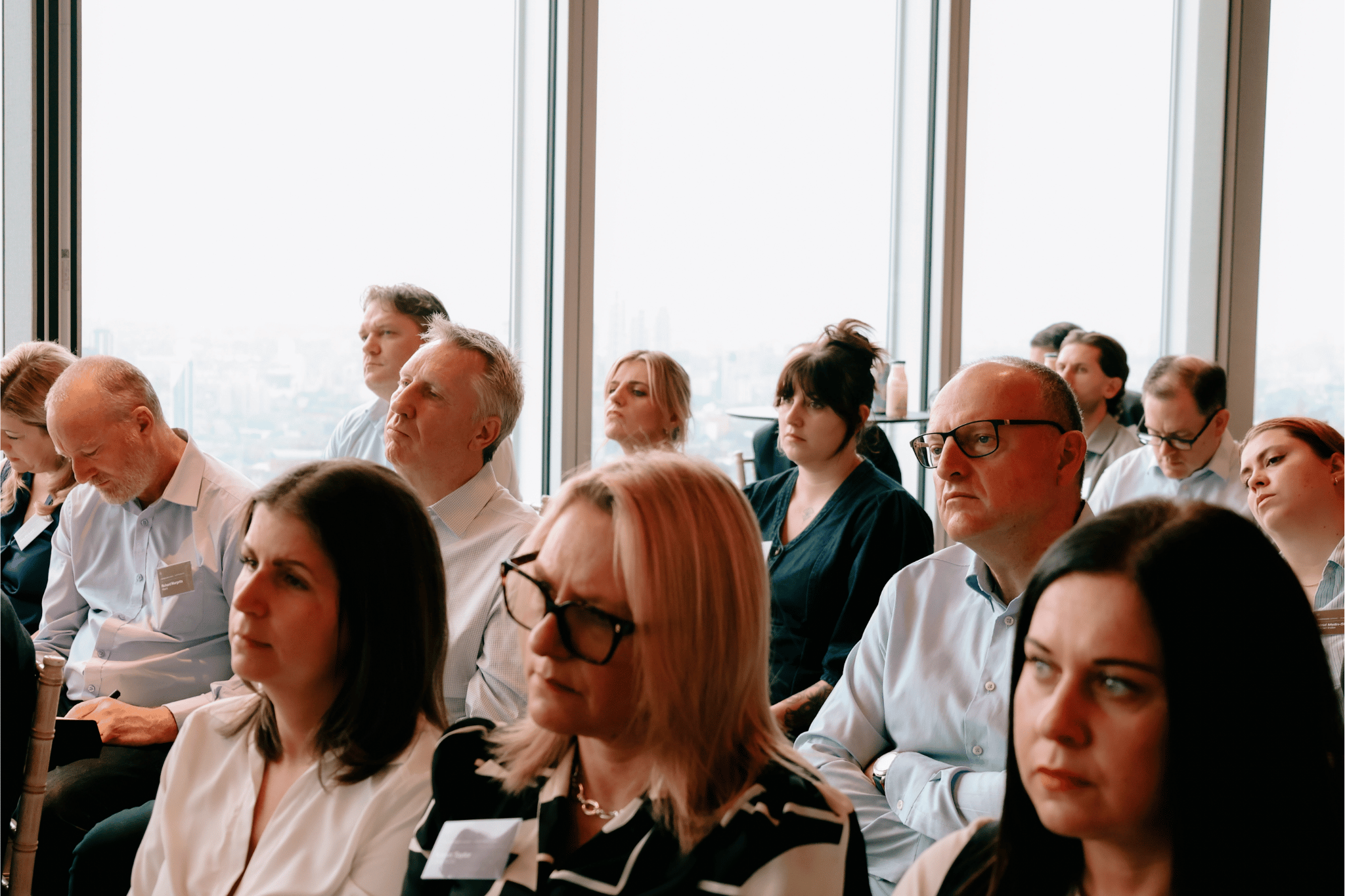
Organisations are investing in their workplaces, yet persuading people to choose the office remains a persistent challenge. So on Wednesday 30 September, we returned to 8 Bishopsgate and brought together senior workplace, HR and real estate leaders to explore the question at the heart of our 2026 thought leadership. What does it take to create a workplace people genuinely want to be in?

The premise of the morning was simple: if the workplace remains a critical part of organisational success, we'd better make sure people want to be there. Our model, The Irresistible Workplace Trio, holds that a workplace becomes irresistible, rather than merely agreeable, through three interdependent forces: cultivated behaviours, hospitality-grade experience and supported change. At our roundtables earlier this year, whichever force a conversation started with, it inevitably pulled in the other two. So the seminar worked through them in turn, before opening it all up to the room.
.png)
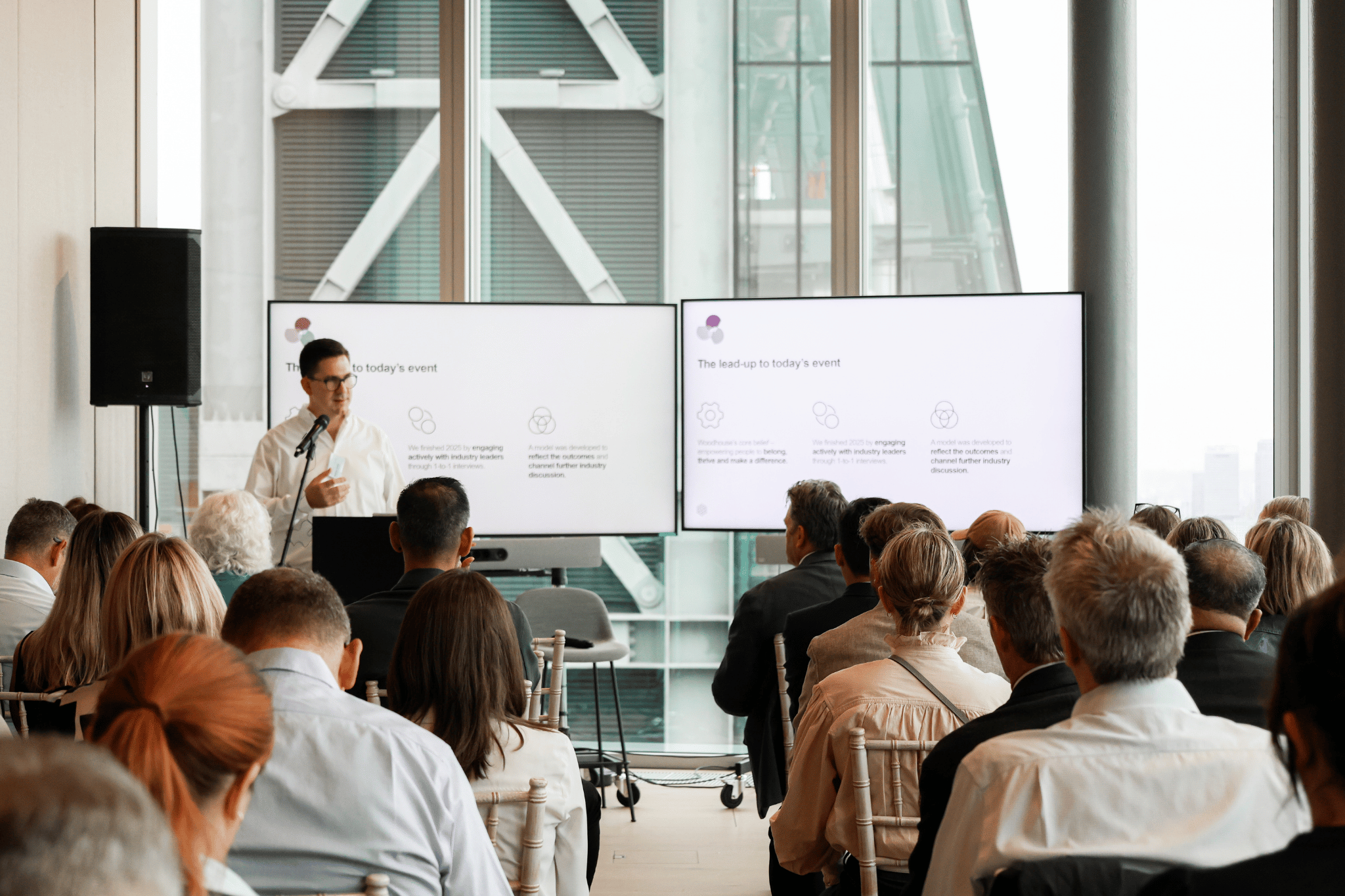
After a welcome from our event compère, Mary Sykes, our MD, Matthew Cooper, explained how the model came about. We ended 2025 with one-to-one interviews with industry leaders, and the model was developed to reflect what they told us. Nearly 75% mentioned attendance challenges, and nearly two thirds called shaping culture a primary purpose of the office. Most talked about creating more human-centred environments: a move from prestige to care. And one standout comment stuck with us: change management is largely overlooked in workspace transformation.
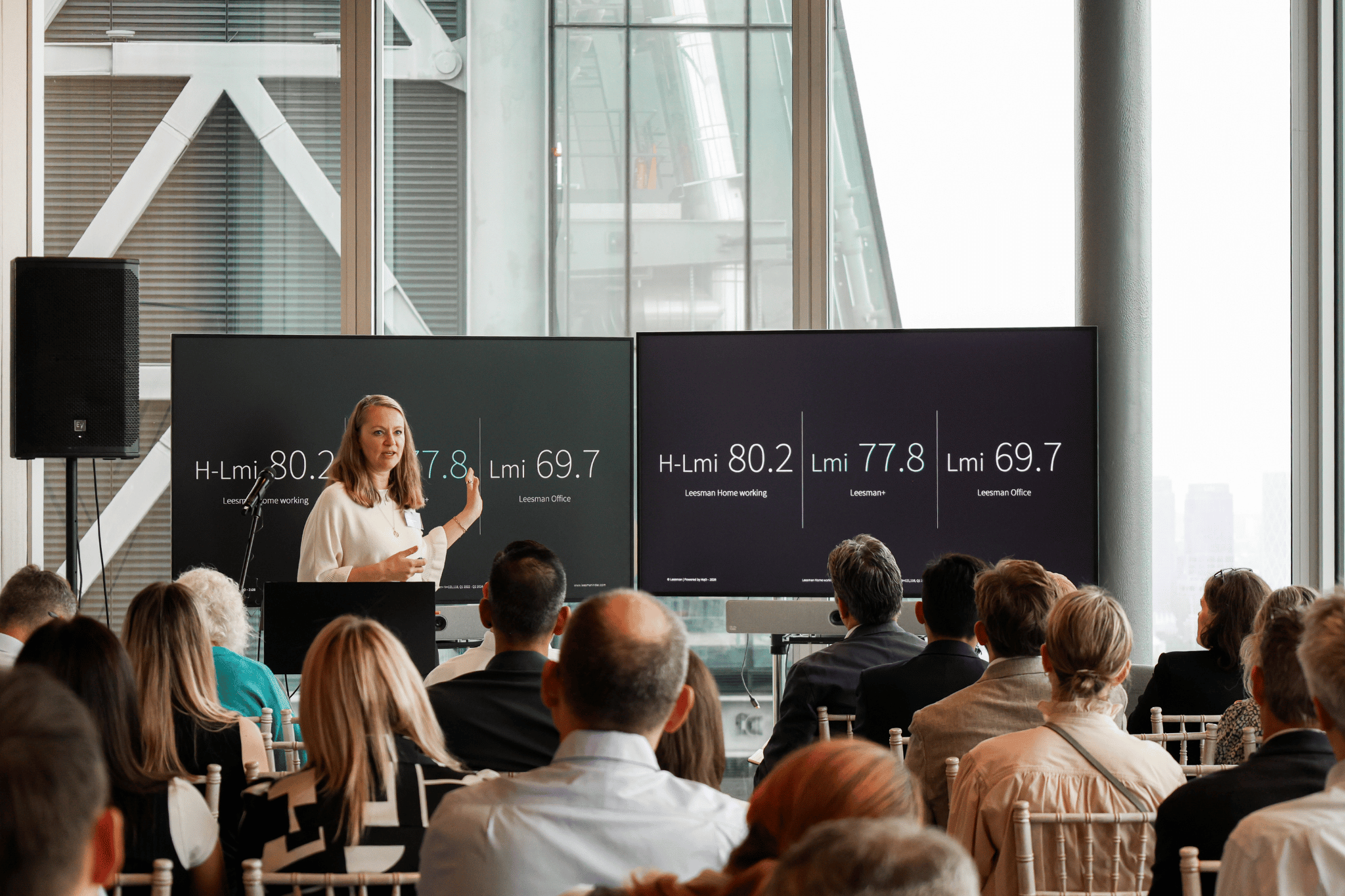
Dr Peggie Rothe, Chief Insights and Research Officer at Leesman, then put today's workplaces to the test, drawing on the world's largest independent workplace experience database and more than 1.6 million employee responses. Her opening comparison set the tone: Leesman's benchmark scores employees' experience of working from home at 80.2, against 69.7 for the average office. Even Leesman+ certified workplaces average 77.8.
The data offered pointers for each force. On behaviours, 70% of corporate real estate leaders rank fostering collaboration and knowledge exchange among the workplace's top three purposes. Yet individual focused work tops the list of activities employees rate as important (89%). On experience, only 64% of employees are satisfied with hospitality services and just 34% with noise levels. And unassigned workplaces outperform assigned desks only when they offer a good variety of space. On change, workplace change projects lift experience scores by an average of 5.8 points across 105 projects. But how long do those gains last without ongoing support?
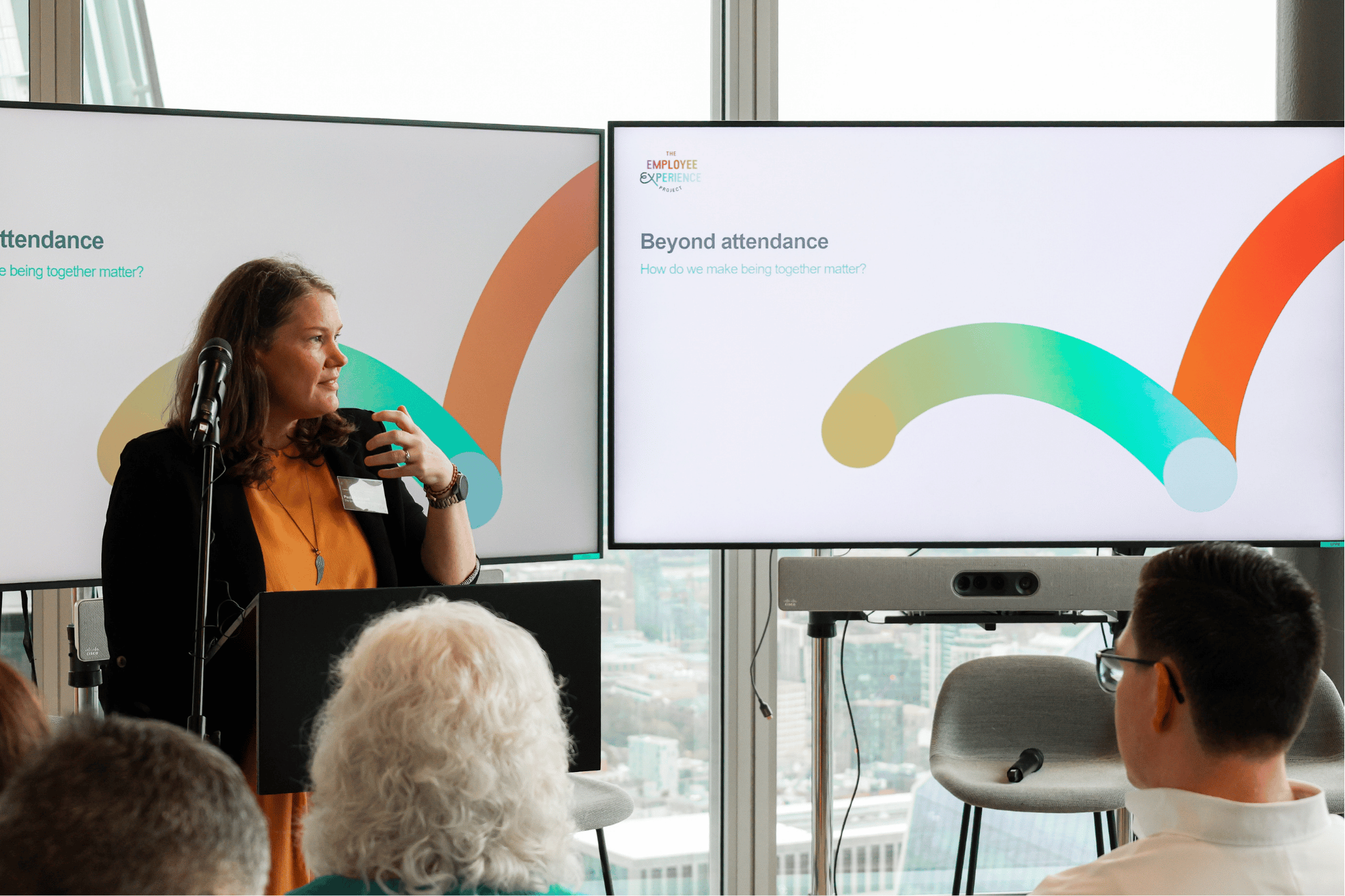
Occupational Psychologist Paula Brockwell CPsychol, founder of The Employee Experience Project, turned the focus to behaviour. Organisations are investing significant time, energy and money in bringing people together, she noted, but attendance itself is not a business outcome. Even a fantastic space cannot unlock performance on its own. Chasing a generic sense of 'good' or 'better' is risky, so Paula made the case for a needs-based definition of good, starting from business need, talent need and the performance mode the organisation is aiming for. From there, leaders can be intentional about the behaviours they want, prime people for success and support them through each stage of change readiness: awareness, mindset, capability and opportunity.
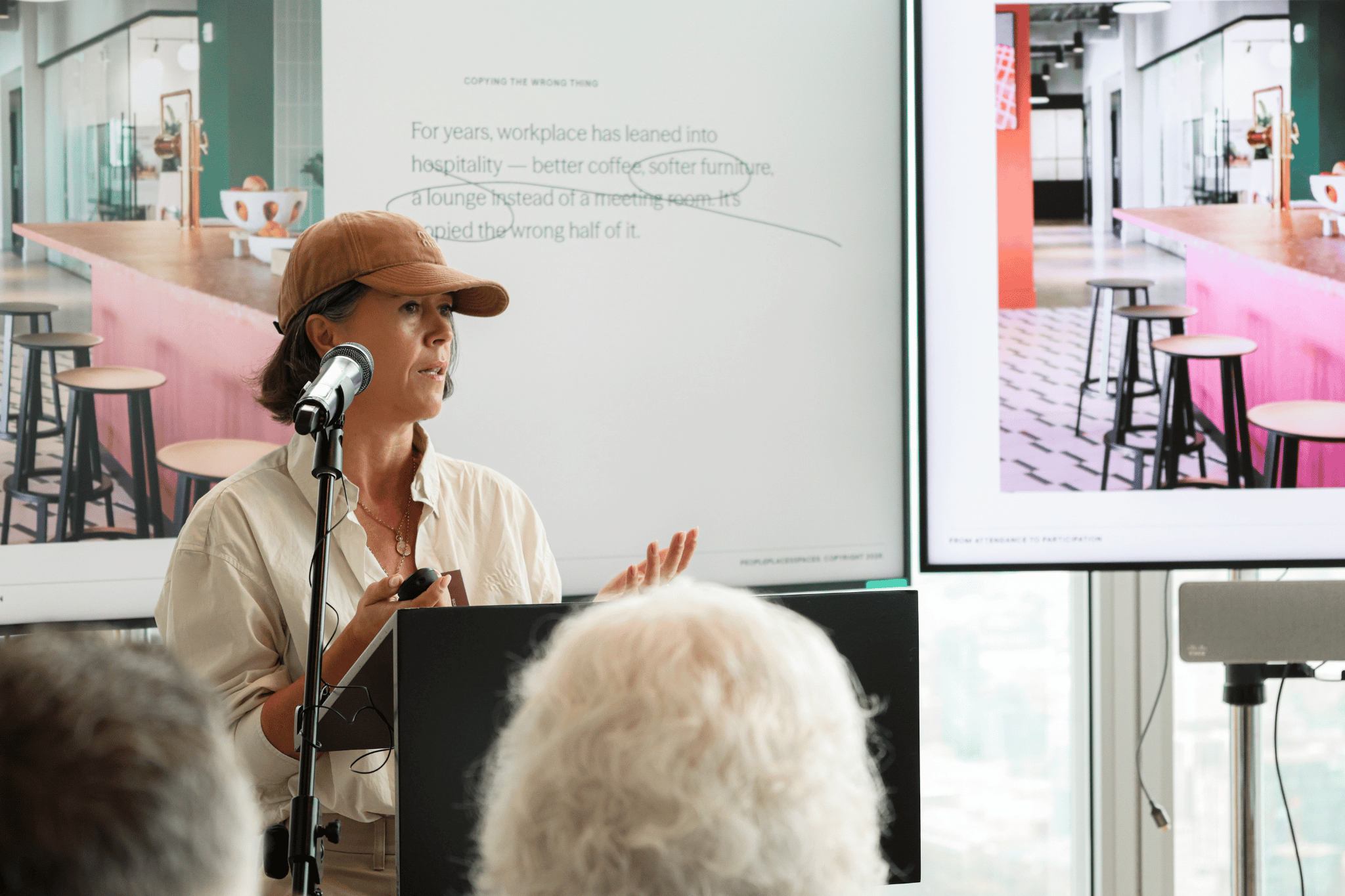
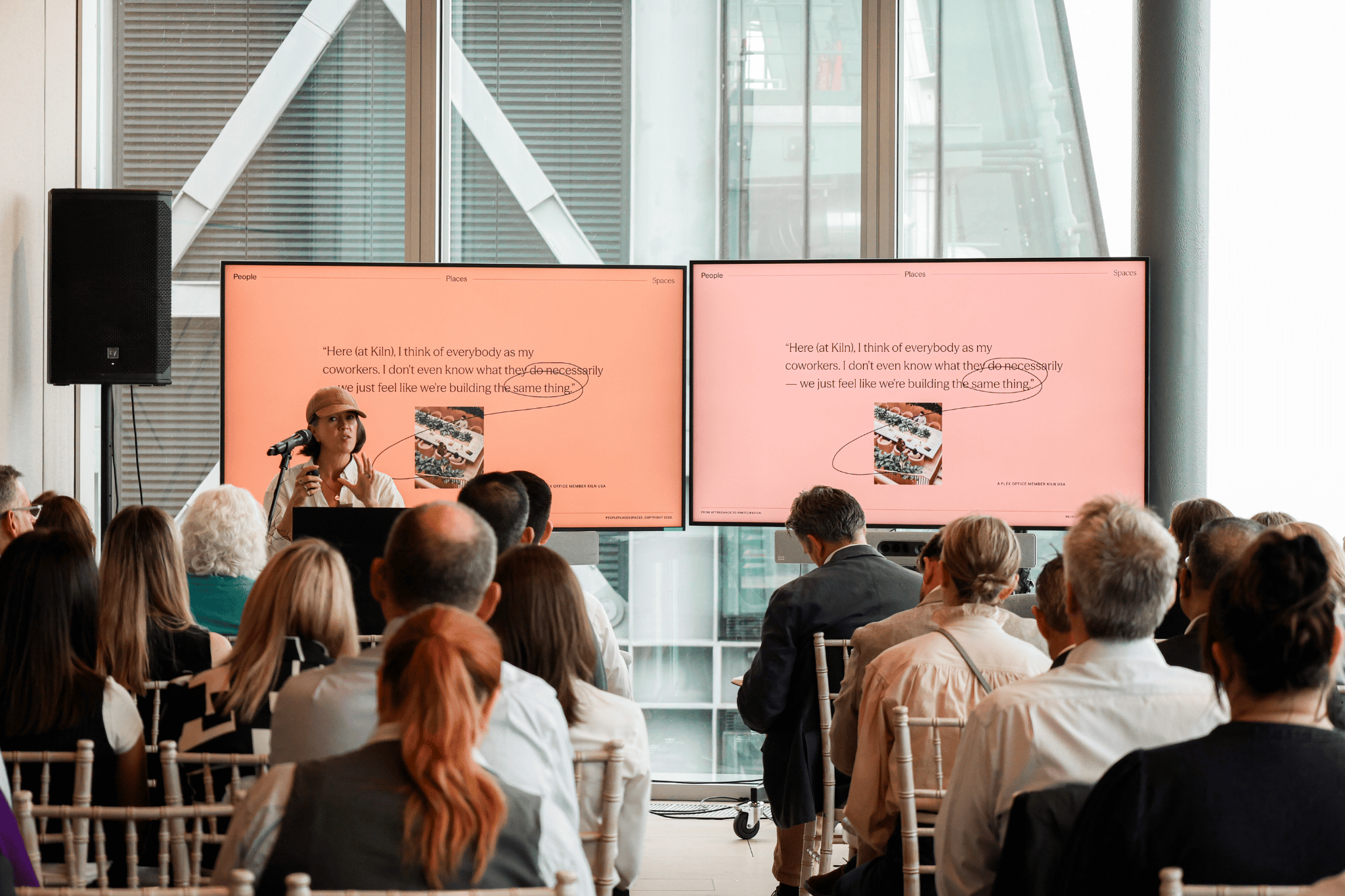
Philippa Wagner, founder of creative strategy studio PeoplePlacesSpaces, brought a hospitality lens to the morning. For years, she explained, workplaces have borrowed hospitality's visible cues (better coffee, softer furniture, a lounge instead of a meeting room) but 'copied the wrong half of it'. Being physically present doesn't mean you've become part of anything. What hospitality really does well comes down to three things: rhythm, not moments; regulars, not amenities; and authors, not audience. Culture is built by what happens again. A place starts to matter when people stop feeling anonymous. And the best hospitality doesn't perform for people; it builds with them. Bringing it back to the Trio, Philippa reframed each force around participation: how people participate, how participation becomes easy and how it becomes sustained. Her closing thought: the workplace doesn't need everyone to join in. It needs people to feel they're part of something.
.webp)

.webp)
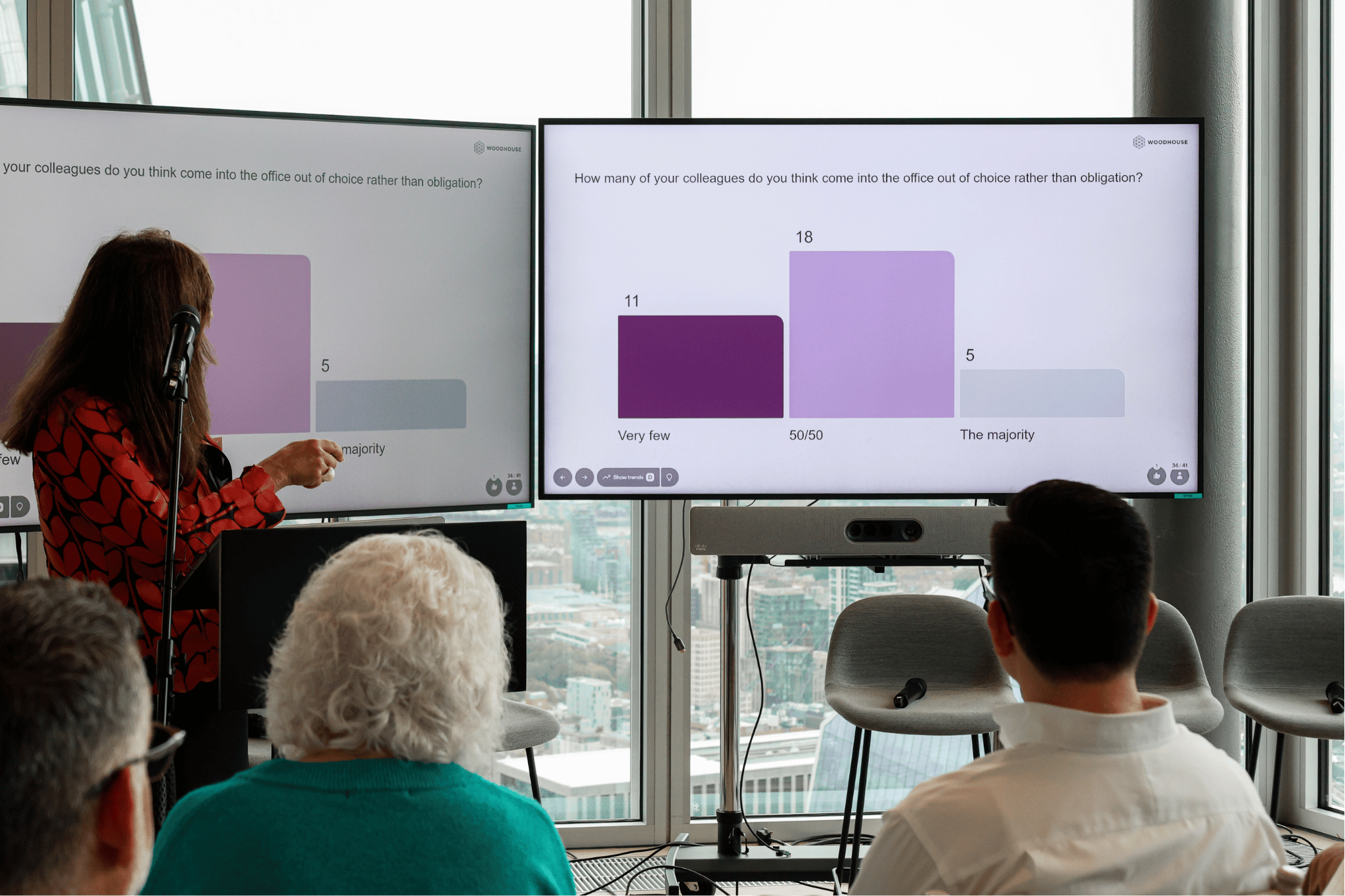
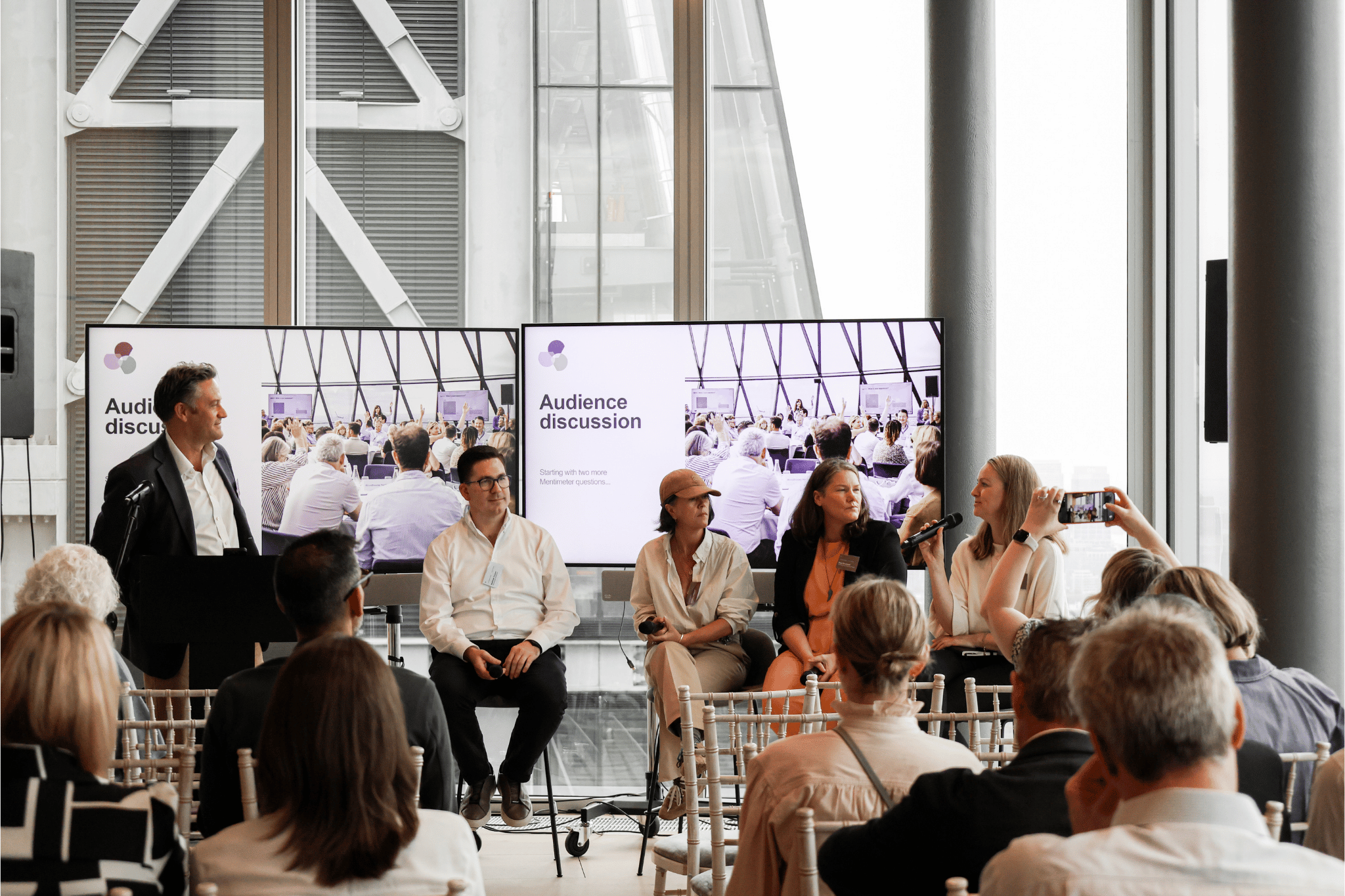
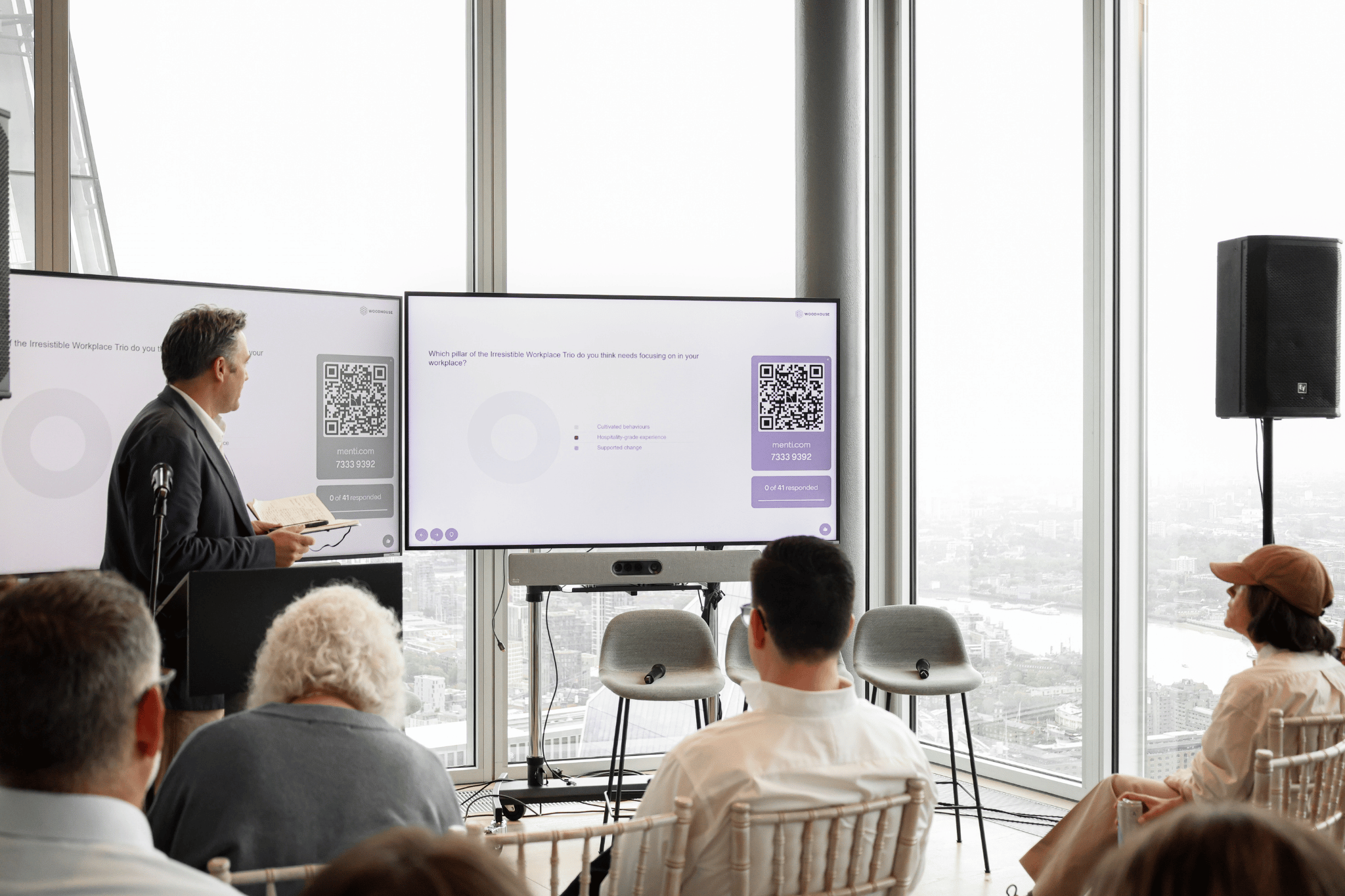
After Peggie's session, guests shared their own views through a live audience survey on their phones, and two more questions opened the final discussion. This was led by Richard Coope, founder and lead consultant at transformation consultancy Brightful, who has worked alongside Woodhouse on client projects. Having guided leading brands through significant change programmes, including workspace change, Richard brought a client-side view of what makes change land and where it can come unstuck. The Q&A gave guests the chance to share their own experiences and put questions to our speakers.